Why History Needs an Atmosphere
- Sunit Gogia
- Jul 2
- 3 min read

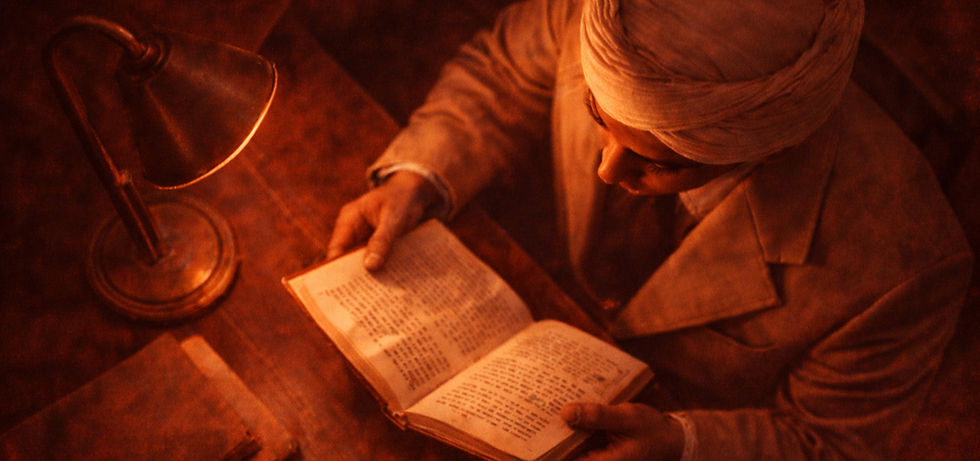
Most history videos tell you what happened. Very few make you feel like you were there.
History is often presented as a collection of dates, timelines, maps, photographs and important names. While these are essential to understanding the past, they rarely help us experience it.
As filmmakers, our job isn't just to explain history. It's to transport people into it.
The people who lived through the Ghadar Movement, the freedom struggle, or any defining moment in history weren't thinking about chapters in a textbook. They were living through uncertainty, hope, fear and courage. Those emotions are just as much a part of history as the events themselves.
The challenge is simple:
How do you make viewers experience history instead of simply learning about it?
Archives Preserve Facts. Atmosphere Preserves Feelings.
Every historical project begins with research. Archives, photographs, newspapers and official documents are the foundation of authentic storytelling. They tell us what happened, who was involved and where events unfolded.
But they rarely tell us what it felt like to be there.
Most archival photographs from the early twentieth century are carefully posed. That's simply how photography worked then. Candid moments were rare. Documents record facts. Newspapers report outcomes. Together, they give us an accurate picture of history, but often a distant one.
This is where atmosphere becomes important.
Atmosphere isn't about making history more dramatic or fictional. It's about giving historical facts an emotional context. It allows viewers to connect with people from another era, seeing them not just as names in a history book but as individuals who lived through extraordinary times.
Atmosphere Lives in the Small Details
People often think atmosphere comes from grand visuals. In reality, it's built from hundreds of small decisions.
The colour of the light. The texture of old walls. Dust floating through the air. Smoke from a steam engine. The way clothes wrinkle after a long day. A weathered signboard. The silence before a protest. The rhythm of people walking through a crowded street.
And just as importantly, what we hear.
The distant whistle of a train. Footsteps echoing on stone. The murmur of a crowd before it turns into a chant. Even silence, when used carefully, can carry weight.
Sound expands the canvas beyond what we see. It fills in the spaces the camera cannot show. It gives depth to still images and movement to static frames.
None of these details change history.
But together, they change how history feels.
These small choices help the viewer stop observing history from a distance and start believing they're standing inside it.
That's the difference between looking at history and experiencing it.
AI Expanded the Playground, Not the Job
The arrival of generative AI has changed historical filmmaking in exciting ways, but not for the reasons people often assume.
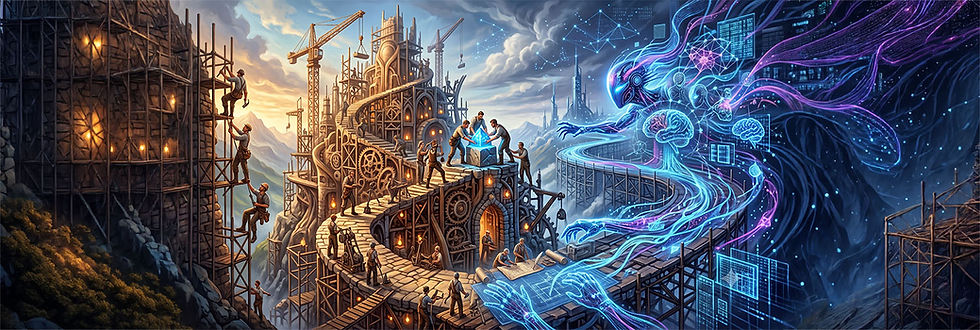
The biggest advantage isn't that AI can generate beautiful images. It's that it allows creators to explore ideas faster than ever before.
A small team can test different visual styles, experiment with colour palettes, refine compositions and build entire worlds in a fraction of the time traditional workflows required. That speed creates room for experimentation, something that was often too expensive or too time-consuming in the past.
But AI doesn't replace creative judgement.
It doesn't decide what a moment should feel like.
It doesn't understand historical nuance.
Those decisions still belong to the filmmaker.
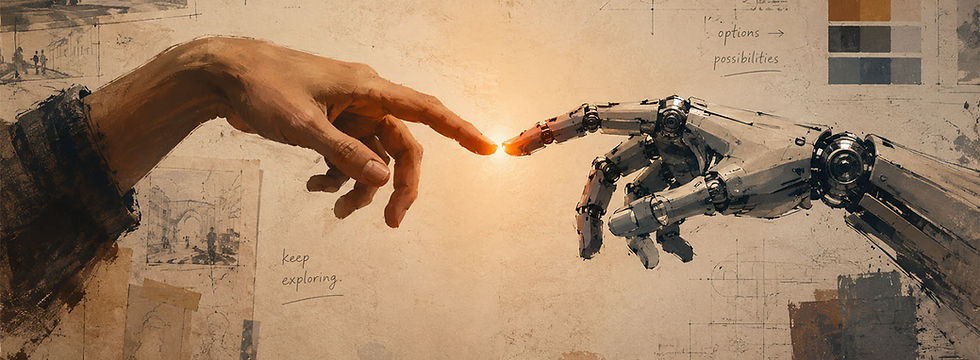
AI has expanded the playground. The responsibility of telling history honestly remains exactly the same.
Building the Missing World: What Ghadar Taught Us
We understood the importance of atmosphere while working on Ghadar.
Unlike many historical subjects, the project had very limited archival material. What we did find was incredibly valuable, but it wasn't enough to build an entire visual world. The references came from different sources, different conditions and different moments. They didn't always feel like they belonged to the same universe.
We quickly realised that we couldn't rely on photographs alone.
Where visual references existed, we followed them as closely as possible. Where they didn't, we turned to written history, letters, official documents, eyewitness accounts and historical descriptions. Those written records helped us imagine the spaces between the photographs.
We weren't trying to invent history.
We were trying to reconstruct the atmosphere that history could no longer show us.
That changed the way we approached every frame.
The Future of Historical Storytelling
Perhaps the future of historical filmmaking isn't about finding more archives.
It's about finding better ways to connect audiences with the people behind those archives.
Technology will continue to evolve. AI will become faster. Workflows will become more efficient. But the real goal will remain the same: helping people experience history, not just understand it.
Maybe the question we should be asking isn't:
How do we explain history?
Maybe it's: How do we transport people into history?
Because in the end, facts tell us what happened. Atmosphere reminds us that it happened to real people.
Comments