We Used AI to Rebuild What History Failed to Photograph
- Sunit Gogia
- 5 days ago
- 5 min read

Updated: 1 day ago
How Ghadar Noir became the visual identity of Legends of Ghadar
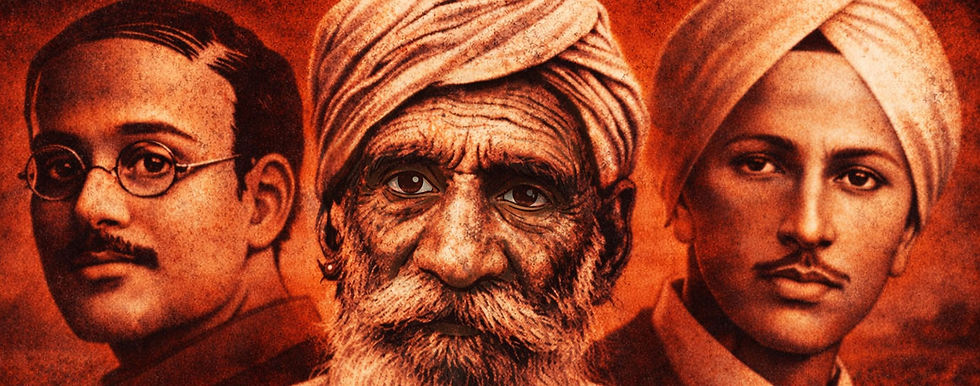
Ghadar Noir is the visual language we built for this series. A world shaped by deep saffron, distressed textures, the bold energy of propaganda posters, and cinematic shadows.
Raw. Textured. Unmistakable.
Its origins weren't found in a creative brief, a mood board, or a design meeting.
They began with a problem.
As we started working on Legends of Ghadar—a historical YouTube series exploring one of India's most radical revolutionary movements. And we quickly encountered a challenge. The archive felt fragmented and incomplete. Large parts of the visual record simply didn't exist.
So we built the world the story deserved.
A visual language that feels archival, tactile, and alive all at once. History that looks rediscovered rather than recreated.

The Problem
Research gave us fragments.
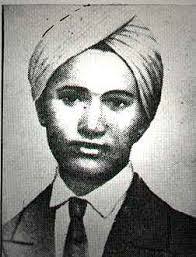
Old photographs. Scattered documents. Fleeting visual evidence—enough to reveal pieces of the story, yet never the story in its entirety. The world of 1912 looked very different, and cameras were rarely in the hands of those fighting the revolution.
The Ghadar Party wasn't simply overlooked by history. Much of its visual legacy was never recorded to begin with.
That left us with two paths. We could anchor the series to the limited archive that survived, or create a visual language that remained faithful to the spirit of history wherever the archive fell silent.
We chose the second.




Building Ghadar Noir
A visual language finds its soul before it finds its style.
For us, that journey began with a single colour: Bhagwa. Deep saffron. A colour woven into India's cultural memory, representing purity, sacrifice, courage, and fire. Sacred in Hindu tradition. The foremost colour of the Indian flag. The colour of warriors, sages, and resilience.
For a series exploring India's first war of independence, every creative decision naturally led us back to it.
From there, the visual language took shape.
Sepia and aged paper tones evoked something recovered rather than recreated. Print grain and distressed textures gave every frame a handmade, tactile quality. The bold graphic language of propaganda posters echoed the Ghadar Party's own methods of communication. Cinematic chiaroscuro transformed light and shadow into emotional storytelling. Every frame carried the feeling of a memory that had endured history, rather than an image that had just been created.
The goal remained simple :
History should feel discovered. Not generated.
Digital perfection had no place here. Every frame needed the character of an archival find instead of the precision of a modern studio.
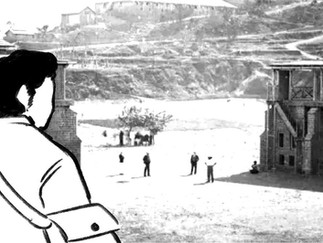
Sketch → Ghadar Noir Frame → Final Video Clip


The Process
Every episode began with the script.
Once the script was locked, we worked through it scene by scene, identifying every moment that required visual reconstruction. Where did the archive give us enough? Where did it leave gaps? That map became the foundation for everything that followed.
Where archival material existed, it became our reference. Our storyboard artist studied every photograph, every document and every available visual clue before translating them into hand-drawn sketches, a human interpretation of historical evidence.
Where the archive fell silent, research took the lead. Documents, eyewitness accounts, historical context, and the lives these revolutionaries lived, fought and sacrificed for shaped what came next.
With the storyboards approved, our AI pipeline came to life. Every sketch and archival reference moved through a custom GPT built specifically for this series, transforming them into a single, cohesive visual language.
Consistent characters.
Consistent colour.
Consistent soul.
Those artworks were then brought to life as video before becoming part of the final edit, woven seamlessly alongside authentic archival footage.
Research → Script → Storyboard → Sketch → Ghadar frame → Video → Edit
Every step followed the same sequence.
Every episode.




The Custom GPT
A visual language is only as strong as its consistency.
Six episodes. Different scenes. Different source material. Archival photographs in one sequence. Hand-drawn sketches in another. Yet every frame needed to belong to the same visual world.
So we built a tool specifically for this series.
A custom GPT trained on the principles of Ghadar Noir. It understood the palette, the textures, the lighting, and the visual grammar that defined the series. Whether we fed it an archival photograph or a hand-drawn sketch, the outcome remained remarkably consistent.
Consistent characters.
Consistent colour.
Consistent soul.
The process evolved with the project itself.
It began with experiments. Sketches moving through the GPT. Testing. Refining. Repeating. The first version emerged once the visual language felt stable, but the work never really stopped. Every new frame expanded the reference library, strengthened the system, and made the results even more consistent. As the series evolved, so did the tool.
The first completed episode confirmed something we had hoped for from the beginning.
Ghadar Noir had become more than a style.
It had become a visual language.
Want to see what Ghadar Noir can do with your image or sketch?
Try the custom GPT yourself:


AI As Process, Not Heart
The heart of this project was always human.
AI became part of the process, not the creative intent behind it.
Every creative decision came from people. Every frame was shaped by human judgment, experience and instinct. The eye behind every output remained human, guiding each choice with intention and taste.
AI expanded what the process could achieve.
The creative direction never changed hands.
Human intelligence first.
Always first.


The Team
None of this was a solo effort.
Rakshita - our illustrator and storyboard artist. The human hand behind every sketch. The foundation everything else was built on. Without her drawings, there is no Ghadar Noir.
Gunjan - worked the custom GPT every single day. Wrestled with it. Refined it. Never gave up. The consistency you see across the series is because of her patience and grit.
Raj - writer, researcher, scene designer, video converter. Deeply versed in the history and the story. Helped design scenes, managed the final video pipeline, and wore every hat without being asked.
As Creative Producer I conceptualised the visual world of Ghadar Noir from scratch. Designed the complete production pipeline, built the custom GPT, and led the project from art direction through final edit. Art, technology, and production. All under one brief.
A small team. A big vision. A lot of figuring things out together.
The Result
Six episodes. One complete visual world.
Every frame built from either a real archive reference or a hand drawn sketch. Every character consistent across the series. Every scene carrying the weight of Bhagwa, grain, shadow, and revolutionary energy.
Legends of Ghadar is now live on Confluence History on YouTube.
It doesn't look like most history content you've seen. It was never meant to.
It looks like something recovered. Something that survived.
Something that deserved to be remembered.
Legends of Ghadar Trailer
Closing
We didn't use AI to replace what was missing. We used it to honour what deserved to be found.
The story of the Ghadar revolutionaries has always mattered. Our goal was to help bring its visual legacy back into view.
If this story interests you. Watch the series at Confluence History on YouTube.
If the process interests you. Let's talk.
Legends of Ghadar @ConfluenceHistory on YouTube
Sunit Gogia
Creative Producer, Legends of Ghadar
Amazing piece of work